Is a Mobile Sauna Business Profitable? An Honest Look
A mobile sauna can be a viable business in the UK, but it isn’t passive income and there are no guaranteed returns — what you earn depends entirely on how often you can run it, where, at what price, and how well you manage costs. The honest version is this: it’s a low-overhead way into the wellness market with genuinely strong demand in the colder months, but it’s a real operating business that rewards utilisation and good location, not a money machine. Here’s how to judge it for yourself rather than trusting anyone’s headline figures.
The revenue side
Income comes down to a simple chain: sessions you run × price per session × how full you run them. A unit that sits idle earns nothing; a unit booked solid through winter weekends and event season is a different story. The levers you actually control are:
- Utilisation — how many sessions you fill, which depends on location, marketing and consistency
- Price — communal per-person rates versus higher-margin private and event hire (see how to price mobile sauna hire)
- Mix — blending steady communal sessions with premium private bookings and events
Because these vary so much between operators, anyone quoting you a guaranteed weekly or annual figure is guessing. Model your own numbers using rates and demand you can actually evidence in your area.
The cost side (the part people skip)
A realistic picture means counting everything, not just the build:
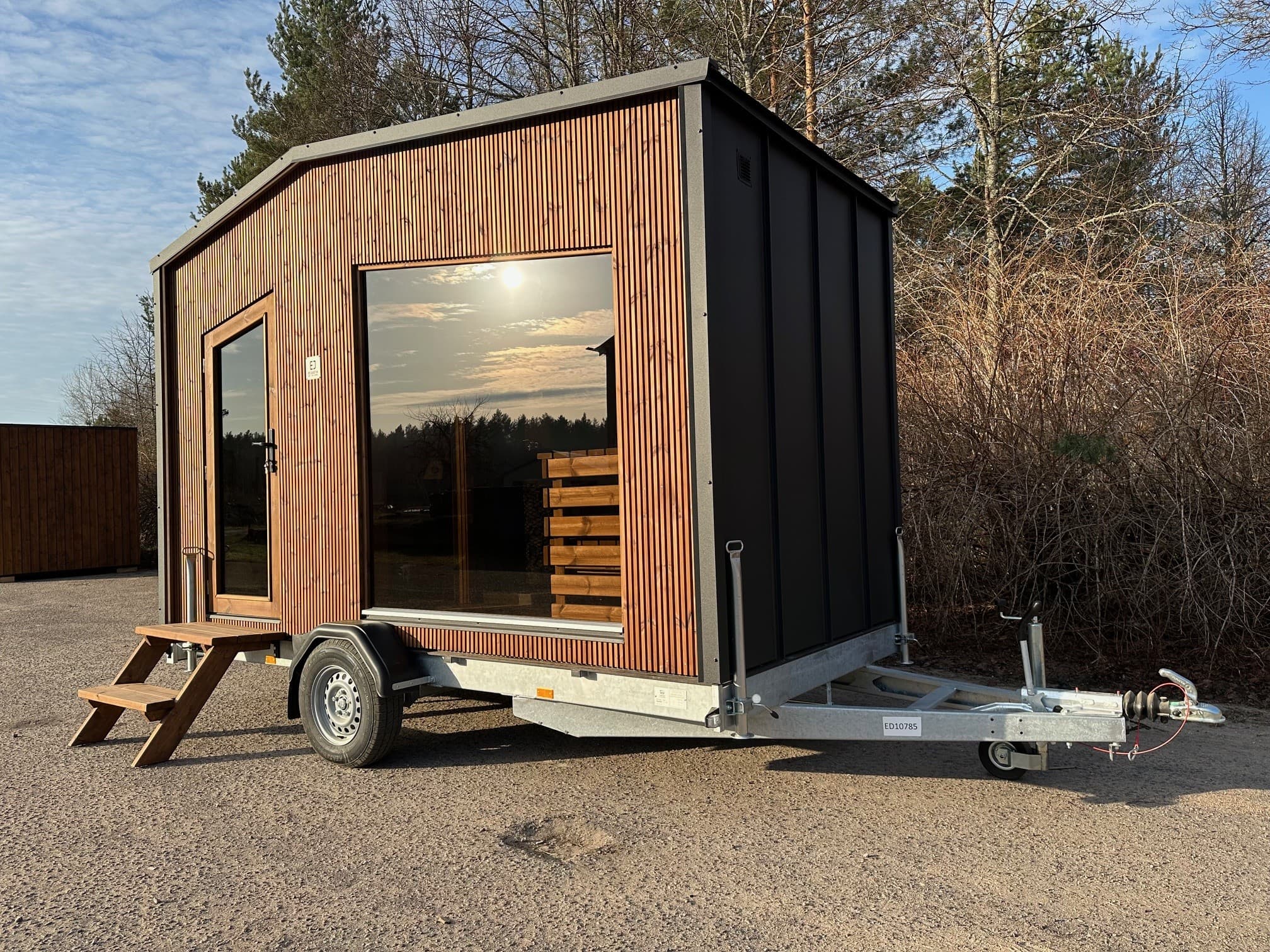
- The sauna: a made-to-order trailer from £12,000 — your main capital cost
- Tow vehicle: capable of legally towing the unit (see towing & licensing)
- Insurance: public liability, trailer and equipment cover (see insurance)
- Running costs: fuel, wood or electricity, maintenance and timber care
- Site costs: pitch and event fees, licences and permissions (see where you can operate)
- Marketing and admin: bookings system, card fees, promotion
- Your time: towing, setup, running sessions and pack-down is real labour — cost it in
Subtract all of that from your revenue and you have your actual profit. Many operators are surprised by how much the time and site costs matter, which is exactly why honest modelling beats optimistic assumptions.
Seasonality and payback
Demand for saunas is counter-seasonal — autumn and winter, cold-water-swim culture and the events calendar drive the peaks, while high summer can be quieter outside of festivals. A sensible plan treats winter weekends and event season as the engine and builds a year-round mix around them. How quickly the initial outlay is recovered depends entirely on your utilisation and margin; it could be reasonably quick for a busy, well-located operator or much slower for an occasional one. There’s no fixed payback period — it’s a function of your own numbers.
So is it worth it?
For someone who’ll actually work it — secure good locations, market consistently, run through the cold months and price properly — a mobile sauna is one of the more accessible wellness businesses to start, with a tangible asset and clear demand. For someone expecting it to earn while it sits in a yard, it won’t. Treat the figures in any “passive income” pitch with suspicion, model your own costs and demand honestly, and you’ll know whether it’s worth it for you.
When you’re ready to plan it properly, start with how to start a mobile sauna business in the UK, and enquire when you want to talk through a build.