Wood-Fired vs Electric Mobile Sauna: Which Should You Choose?
It is the first real decision most people make when they commission a mobile sauna, and it shapes everything after it: where you can operate, what it costs to run, how much work each session takes, and how the heat actually feels. Here is a straight, UK-focused breakdown for anyone building a sauna for a hire business.
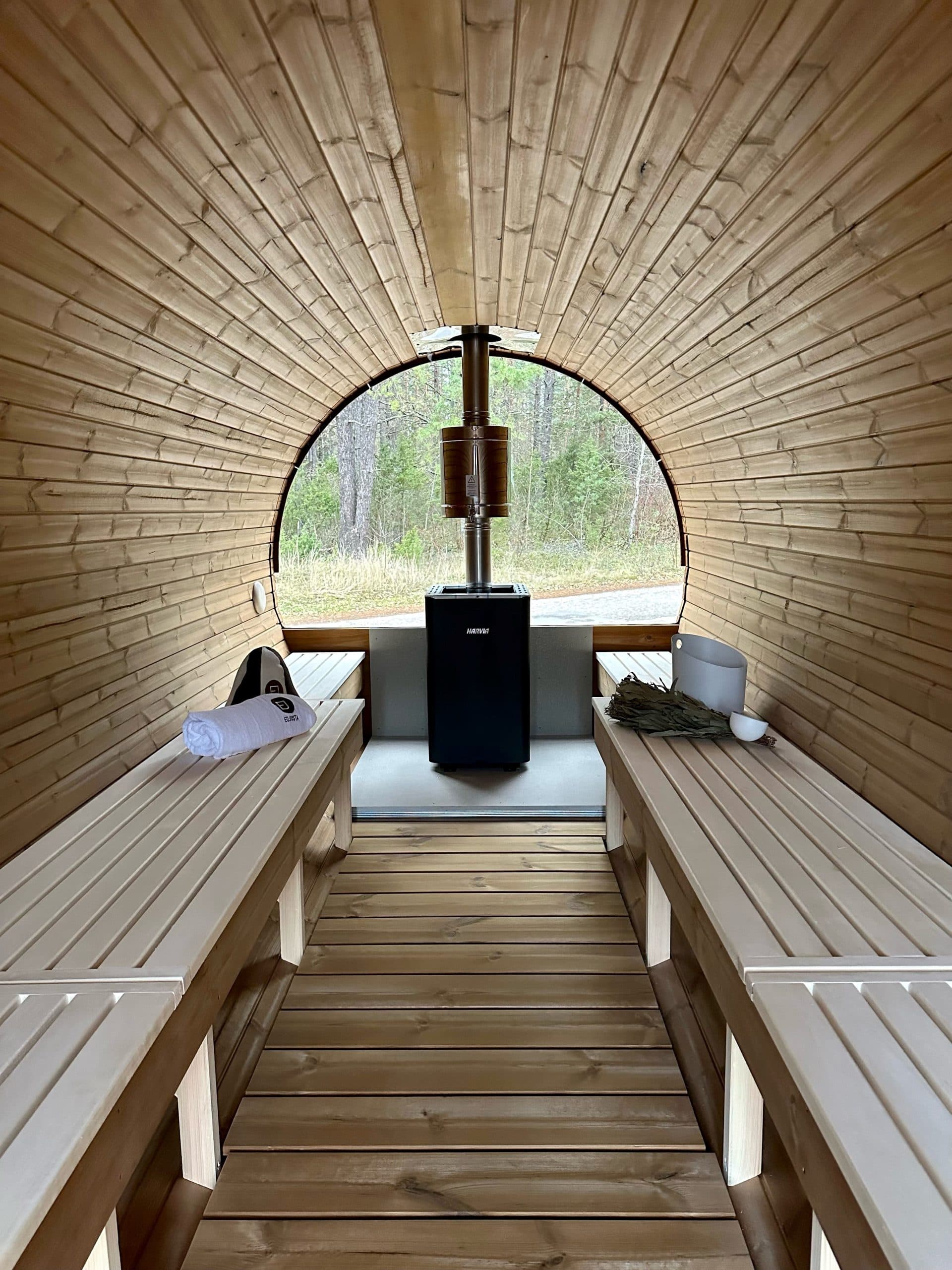
The short answer
For a genuinely mobile sauna — one that turns up at beaches, lakes, fields, festivals and private gardens — wood-fired is almost always the right call. The reason is simple and practical: those locations rarely have the electrical supply an electric heater needs. Wood makes the unit self-contained, so it works anywhere you can park it.
Electric earns its place when the sauna largely stays put somewhere with proper power — a fixed yard, a gym or studio forecourt, a wellness site with an industrial hook-up. There, the convenience of flicking a switch can outweigh the freedom of going off-grid.
Power access: the deciding factor
A sauna heater pulls a lot of current. A typical electric sauna stove needs a dedicated high-current circuit — far beyond a standard 13 amp domestic socket — and larger cabins often need a three-phase supply. Outdoor pop-up spots simply do not offer that. A wood-burning stove sidesteps the problem entirely: load wood, light it, and the sauna is up to temperature without a single cable.
So the honest first question is not “which is better?” but “where will this sauna actually live and work?” If the answer is “wherever the bookings are”, wood-fired settles it.
Heat quality and löyly
Beyond logistics, the two heat sources feel different. A wood-burning stove carries a large mass of stones and an exposed firebox, so a good portion of its output reaches you as radiant heat — the deep, sun-like warmth that penetrates rather than just surrounding you. That stone mass also holds high temperatures, which is why wood-fired saunas tend to take löyly — water ladled onto the rocks — so well, producing soft, generous steam.
Electric heaters are convection-led: they warm the air evenly and reliably, with precise control via a dial or app. It is a clean, consistent experience, but many seasoned bathers describe it as a little flatter than a roaring stove. For a hire business selling an experience, the crackle and glow of a real fire is often part of what people are paying for.
Running costs and effort
Running cost splits into two parts — fuel and labour — and the two heat sources trade places depending on which you count.
- Wood-fired: firewood can be inexpensive per session, particularly if you buy seasoned hardwood in bulk or have a reliable local source. The cost is your time: lighting and tending the fire, then raking out ash and keeping the flue clean. Budget for the labour as well as the logs.
- Electric: no fuel to carry or store, no ash to clear — but you pay a metered charge for every session, and energy prices move. There is far less hands-on work, which matters if you run back-to-back bookings.
If your model is high-volume, staffed sessions in a fixed location, electric’s low-effort convenience can win. If you are a one- or two-person operation moving the unit around, the wood-fired ritual is part of the job — and often part of the charm.
Heat-up time and control
Electric gives you set-and-forget control: a timer, a target temperature, sometimes a phone app to fire it up before you arrive. A wood stove needs a person to light it and bring it up to temperature, then a little attention to hold it there. With dry, well-seasoned wood and a properly sized stove, a compact mobile cabin heats quickly — but it is a managed process, not an automated one. Plan your turnaround times around it.
Maintenance and safety
A wood-burning system brings a flue, a firebox and ash, so it carries the usual solid-fuel responsibilities: correct clearances, heat shielding, regular chimney cleaning, a carbon monoxide alarm, and clear customer instructions. Electric removes the combustion side but adds the need for compliant high-current electrical work and periodic inspection. Whichever you choose, a mobile sauna used commercially should be specified, installed and maintained to a proper standard — it is the foundation of safe operation and of your insurance.
So which is right for your business?
Run it through three questions:
- Will the sauna move to different sites? Yes → wood-fired. It frees you from the power problem completely.
- Does it have a permanent home with a real electrical supply? Yes → electric is worth considering for the lower-effort running.
- What are you selling? If part of the draw is an authentic, fire-lit ritual, wood-fired leans into it. If you are optimising for fast, repeatable, low-labour sessions, electric supports that.
For most mobile sauna hire operations in the UK, the path of least resistance — and the one customers respond to — is a well-built, wood-fired trailer that can work anywhere you tow it. We build to suit your model either way, and we are happy to talk it through before you commit.