Where Can You Operate a Mobile Sauna in the UK?
You can operate a mobile sauna on private land with the landowner’s permission, at events and festivals by arrangement with the organiser, and on some council or public land where you hold the right permit or licence. What you can’t do is simply set up on public land, a beach or a layby without permission — most public spaces require a licence, and trading or siting a structure without one can mean being moved on or fined. Because the sauna is on wheels, the structure itself usually avoids planning permission, but where and how long you place it can still trigger rules.
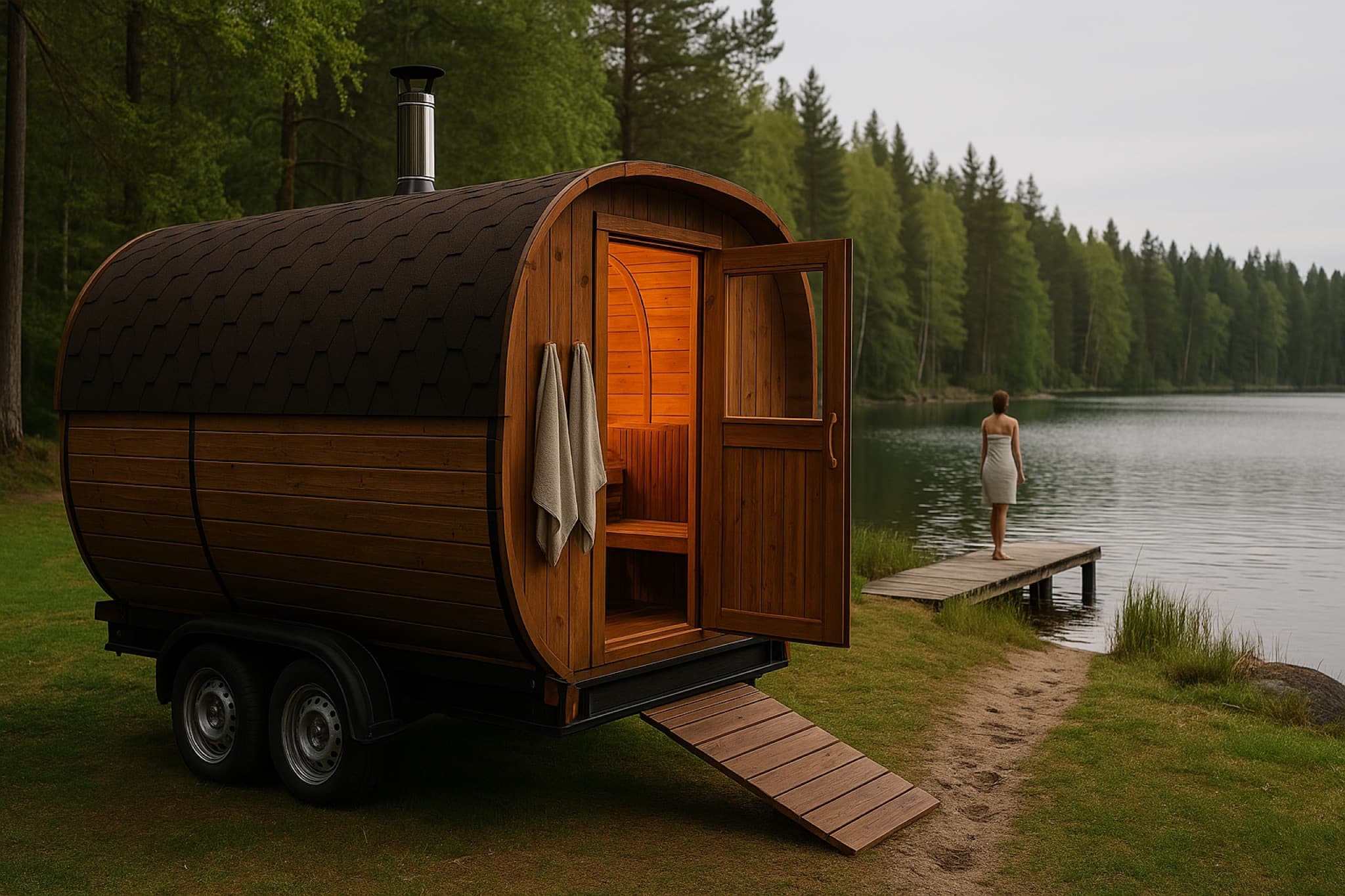
Private land
The simplest place to operate is private land — your own, a client’s, a campsite, a gym, a retreat or a farm — where the owner has agreed. For a hire business this is the bread and butter: you arrange access with the landowner, agree terms, and operate within whatever they permit. Check the landowner’s own insurance and any conditions, and make sure there’s safe vehicle access to tow in and out.
Beaches and the coast
Beaches are one of the most popular settings for mobile saunas, but most UK foreshore is owned or managed (by the Crown Estate, local councils or private estates) and requires permission or a concession/licence to trade. Rules vary enormously by beach and council, so approach the relevant local authority or landowner early — a good coastal pitch is worth securing properly rather than risking being shut down mid-season.
Parks, public land and council pitches
To operate in a public park or other council land you’ll typically need to apply to the local authority for permission, and possibly a street-trading or events licence. Some councils actively welcome wellness operators and run application processes; others don’t permit it at all. It’s a council-by-council conversation, so build the lead time into your plans.
Events and festivals
Events are where mobile saunas thrive. Here you deal with the event organiser rather than a landowner: you book a pitch, and they’ll almost always require proof of public liability insurance (often £5m — see our insurance guide), a risk assessment, and sometimes a gas/electrical or fire-safety check. Get these in order once and you can reuse them across the season.
Planning permission, fire safety and practicalities
Because a mobile sauna stays on its trailer and is genuinely movable, it generally isn’t treated as a permanent structure needing planning permission — that’s a core advantage over a fixed garden sauna (we compare the two in mobile sauna vs garden sauna). But planning can come into play if you site it in one spot effectively permanently, or on green-belt or protected land, so don’t assume “on wheels” is a blanket exemption. Whatever the location, plan for fire safety (especially with wood-fired heaters and smoke), safe customer access, and where your grey water and ash go.
Working out the bigger picture? The how to start a mobile sauna business guide puts locations alongside equipment, insurance and bookings, and how to price mobile sauna hire helps you turn a good pitch into revenue.